
 (949) 492-2141


San Clemente Implant Dentistry
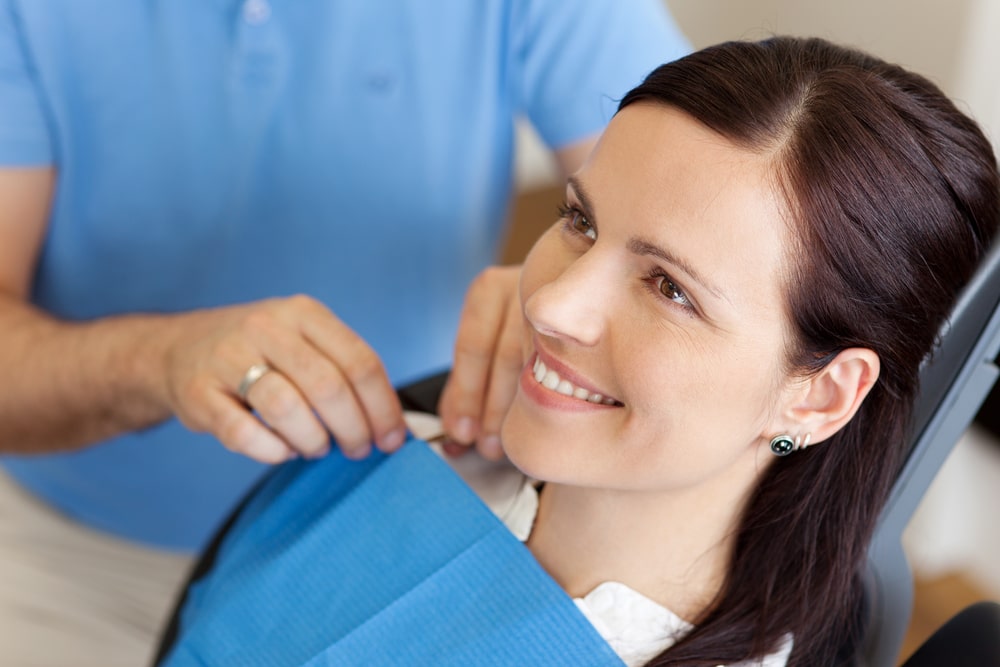
Are you looking for implant dentistry in San Clemente, CA?
At John Redmond Orthodontics, we make it simple to schedule an appointment with a San Clemente implant dentistry provider.
If you have lost a tooth to decay, gum disease, or an injury, a dental implant can restore chewing function along with the appearance of your smile. Dr. M. John Redmond graduated with honors from the University of the Pacific School of Dentistry, then earned a Master of Science in Craniofacial Biology and a Certificate in Orthodontics at the University of Southern California. Our San Clemente, CA implant dentistry care begins with a full evaluation of your bite, your jawbone, and the teeth surrounding the gap. Contact our office to schedule that evaluation.
Implant Dentist in San Clemente, CA
Implant dentistry replaces a missing tooth at the root. A titanium post is placed into the jawbone, left to fuse with the surrounding bone over a period of months, and then fitted with a crown, bridge, or denture. Patients come to us after a single extraction, after years of managing a bridge that no longer fits, or after learning that a fractured tooth cannot be repaired.
Tooth loss is more common than most people assume. CDPH oral health data reported that 64 percent of California adults aged 18 to 64 had no history of tooth loss from decay or periodontal disease, which leaves roughly one in three adults statewide who have already lost a permanent tooth. That same pattern holds in San Clemente and across south Orange County.
Implant Dentistry Services We Offer in San Clemente
Implant treatment is rarely a single procedure. Depending on the condition of the bone and the health of the neighboring teeth, it can involve extraction, grafting, placement, and restoration spread across several appointments. The following services describe the implant work performed at our office.
- Single tooth implants. One post replaces one missing root, and a custom crown is attached once healing is complete. This approach leaves the adjacent teeth untouched, which a traditional bridge cannot do.
- Implant-supported bridges. Two or more implants can anchor a bridge spanning several missing teeth. Fewer posts are required than the number of teeth being replaced, which reduces both surgical time and cost.
- Implant-supported dentures. A denture can be secured to implants rather than resting on the gum tissue. Patients who struggle with slipping lower dentures often see the largest improvement here.
- Full-arch implant restoration. When an entire upper or lower arch is failing, a fixed prosthesis can be supported by a set of strategically placed implants. Planning for these cases takes longer because bite forces are distributed across the whole arch.
- Bone grafting and site preparation. Bone begins to resorb soon after a tooth is lost. Grafting rebuilds enough volume and width to hold an implant securely, and it is sometimes performed at the same visit as an extraction.
- Extraction with implant placement. In selected cases, a failing tooth is removed and a post is placed during the same appointment. Whether this is possible depends on infection, bone quality, and the shape of the socket.
- Implant crowns and abutments. The abutment connects the post to the visible restoration. We match the crown to the shade, contour, and translucency of the teeth beside it.
- 3D imaging and implant planning. Three-dimensional radiographs show bone height, bone density, nerve position, and sinus location before any surgical step. We use iTero digital scanning to record the bite and soft tissue without conventional impression material.
Why Choose John Redmond Orthodontics for Implant Dentistry in San Clemente, CA?
Training and Professional Standing
Dr. M. John Redmond attended San Diego State University before earning his dental degree with honors from the University of the Pacific School of Dentistry. His graduate training at USC produced both a Master of Science in Craniofacial Biology and a Certificate in Orthodontics, a background that shapes how he evaluates bone, bite relationships, and available space before an implant is placed.
He holds membership in the American Dental Association, the California Dental Association, the Orange County Dental Association, the American Association of Orthodontists, and the Pacific Coast Society of Orthodontists. He also belongs to the USC Orthodontic Alumni Association and the Pacific Dental Alumni Association.
Roots in South Orange County
Dr. Redmond lives and practices in Orange County, and our patients come from San Clemente and the surrounding coastal communities. Implant treatment sits alongside the family dentistry and orthodontic care we already provide, so a missing tooth is assessed together with the teeth and the bite around it.
Understanding Implant Dentistry Care
Conditions We Treat and Treatment Options
The right replacement depends on which tooth is missing, how long the space has been open, and the condition of the bone underneath it. Medical history and medication use affect what is possible, and some patients need other treatment before an implant can be considered.
- Single tooth loss from decay or fracture. A post and crown restore the space without altering healthy neighboring teeth.
- Advanced periodontal disease. Bone loss from infection has to be controlled before placement, and gum health influences whether an implant will hold long term.
- Drifting and tipping after an extraction. Teeth beside a gap migrate over months and years, which is one way spacing issues develop. Reopening that space with braces is occasionally necessary before a post will fit.
- Failing bridges or partial dentures. Older restorations loosen, and the supporting teeth beneath them can decay unnoticed.
- Congenitally missing teeth. Some patients never develop a lateral incisor or premolar, and orthodontic space management usually precedes implant placement.
- Insufficient bone volume. Grafting or sinus augmentation may be recommended when the ridge is too narrow or too short.
What Should You Expect from Implant Treatment?
- A clinical exam, medical history review, and three-dimensional imaging at the first appointment.
- A written plan that identifies each stage, the sequence, and any preparatory work such as extraction or grafting.
- Local anesthesia during placement, with most patients describing the procedure as less involved than the extraction that preceded it.
- Follow-up visits to monitor healing and confirm that the post has integrated with the bone before the final restoration is attached.
What Is The Typical Treatment Timeline?
- Consultation and imaging. One visit, with the treatment plan reviewed before anything is scheduled.
- Preparatory procedures. Extraction or bone grafting, when needed, followed by a healing interval that varies with the graft type.
- Implant placement. A single surgical appointment for most single-tooth cases.
- Osseointegration. The FDA patient guidance on dental implants notes that healing of the implant body can take several months or longer.
- Restoration and maintenance. The abutment and crown are placed, then checked at regular hygiene visits.
Healing rates differ. Smoking, diabetes, medication use, and general health all affect the schedule, and we will not commit to a completion date before seeing your imaging.
What Should You Bring to Your First Visit?
- Your dental insurance card and photo identification.
- A current list of medications and supplements, including anything affecting bone density or blood clotting.
- Any radiographs taken by a previous dentist within the last year.
- Completed patient forms, which shorten the paperwork portion of the appointment.
The first visit is diagnostic. We examine the site, review your imaging, and explain which options are realistic for your bone and bite before discussing scheduling.
What Are Some Important California Implant Dentistry Resources?
Patients are entitled to verify credentials and read independent material before agreeing to surgical treatment. The following resources are maintained by state and federal agencies.
- State licensing. The Dental Board of California licenses and disciplines dentists and publishes license status and enforcement records for public review.
- Federal device information. The FDA regulates dental implant systems as medical devices and publishes patient-facing material on materials, risks, and adverse event reporting.
- National oral health statistics. NIDCR tooth loss data reports that adults aged 20 to 64 retain an average of 25.5 permanent teeth.
- Periodontal disease research. NIDCR periodontal data identifies gum disease as the most common cause of adult tooth loss.
- State public health reporting. The California Department of Public Health publishes oral disease burden data by age group and region.
These materials are informational. They do not replace a clinical examination, and nothing here should be read as a diagnosis or treatment recommendation for your situation.
Contact John Redmond Orthodontics
A missing tooth does not improve on its own, and the bone beneath it continues to change. Contact us to request an appointment with an implant dentist in San Clemente, CA.
At your consultation, we will examine the site, review three-dimensional imaging, and tell you plainly whether an implant is appropriate or whether another restoration makes more sense. Patients considering adult orthodontic care alongside implant work can have both discussed in the same visit, and the same is true for anyone already in Invisalign treatment. If you are unsure whether your situation calls for a dentist or orthodontist, our office can help you sort that out. Appointment requests submitted through our website are answered during regular business hours.
Patient Reviews



San Clemente, CA

Suite C
San Clemente, CA 92672
Oceanside, CA
Dana Point, CA
Orange County, CA
Laguna Niguel, CA